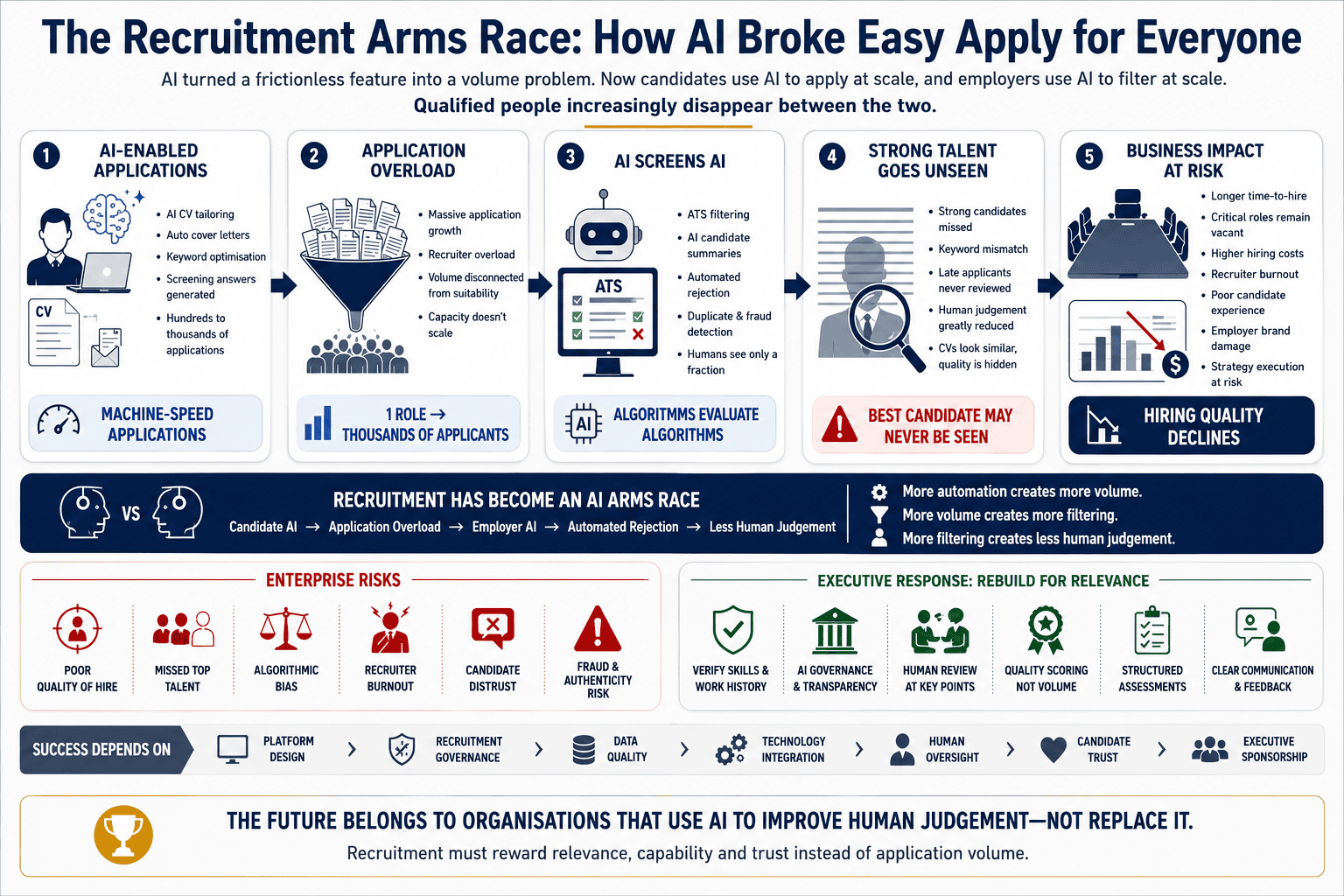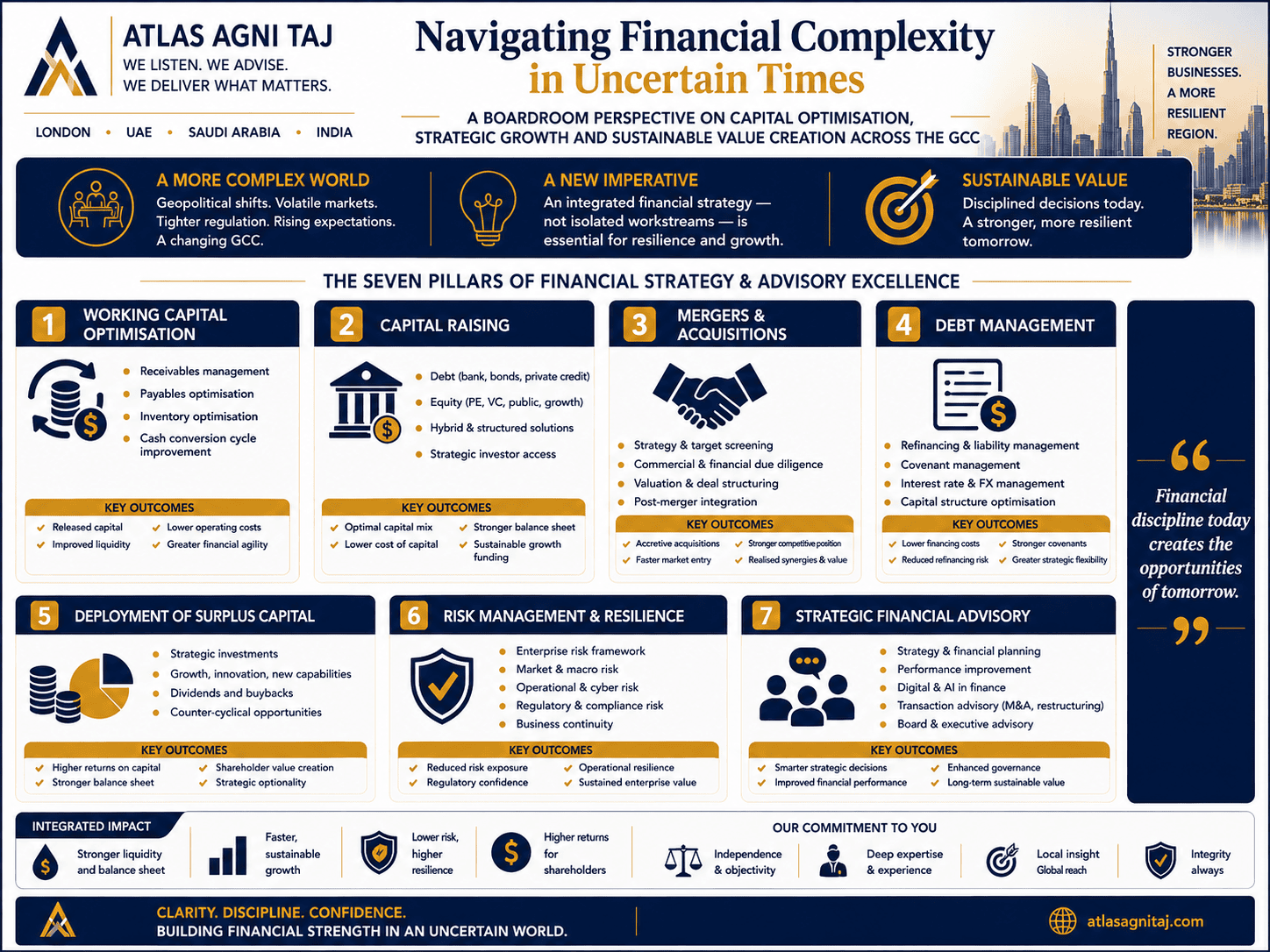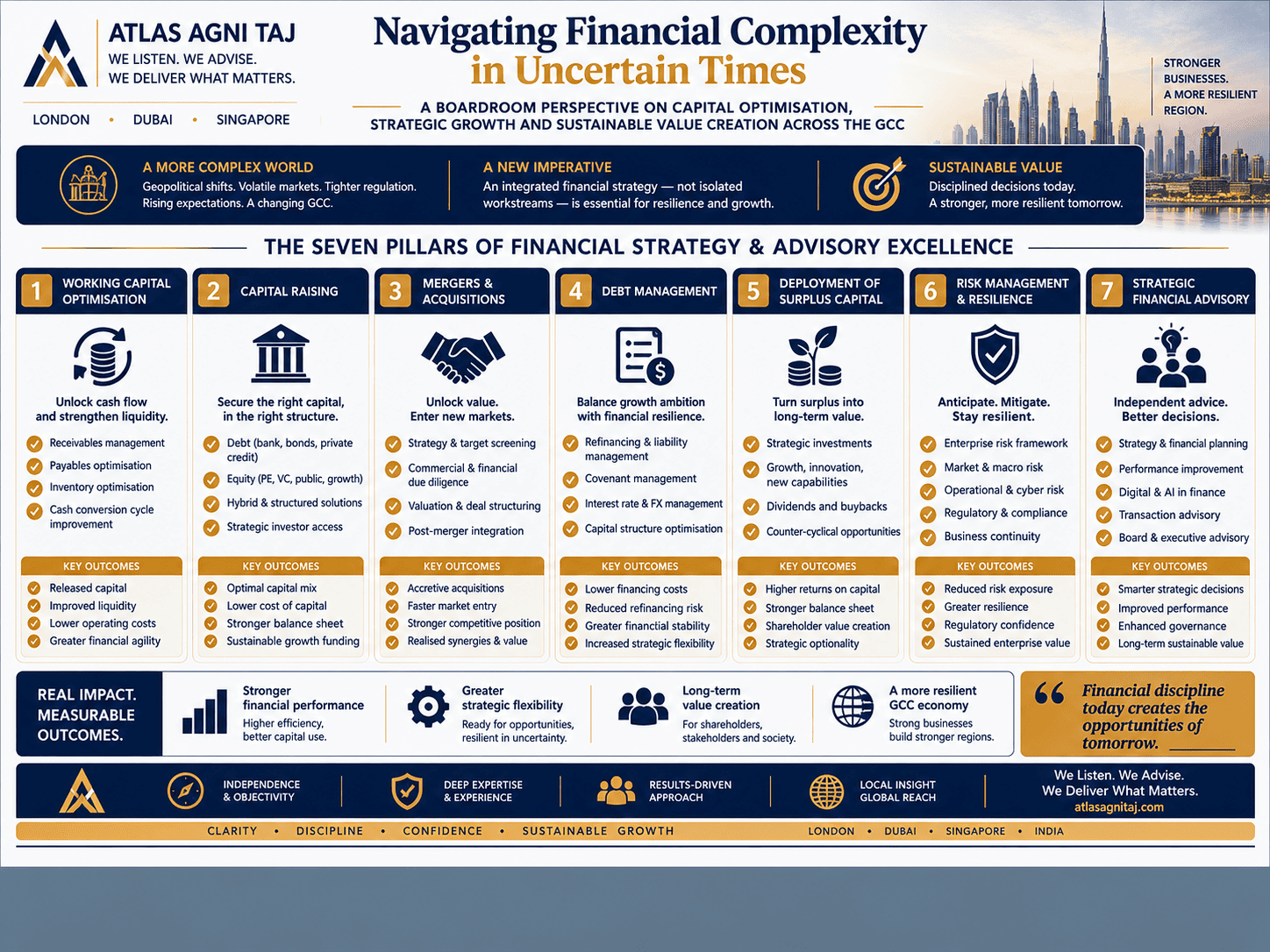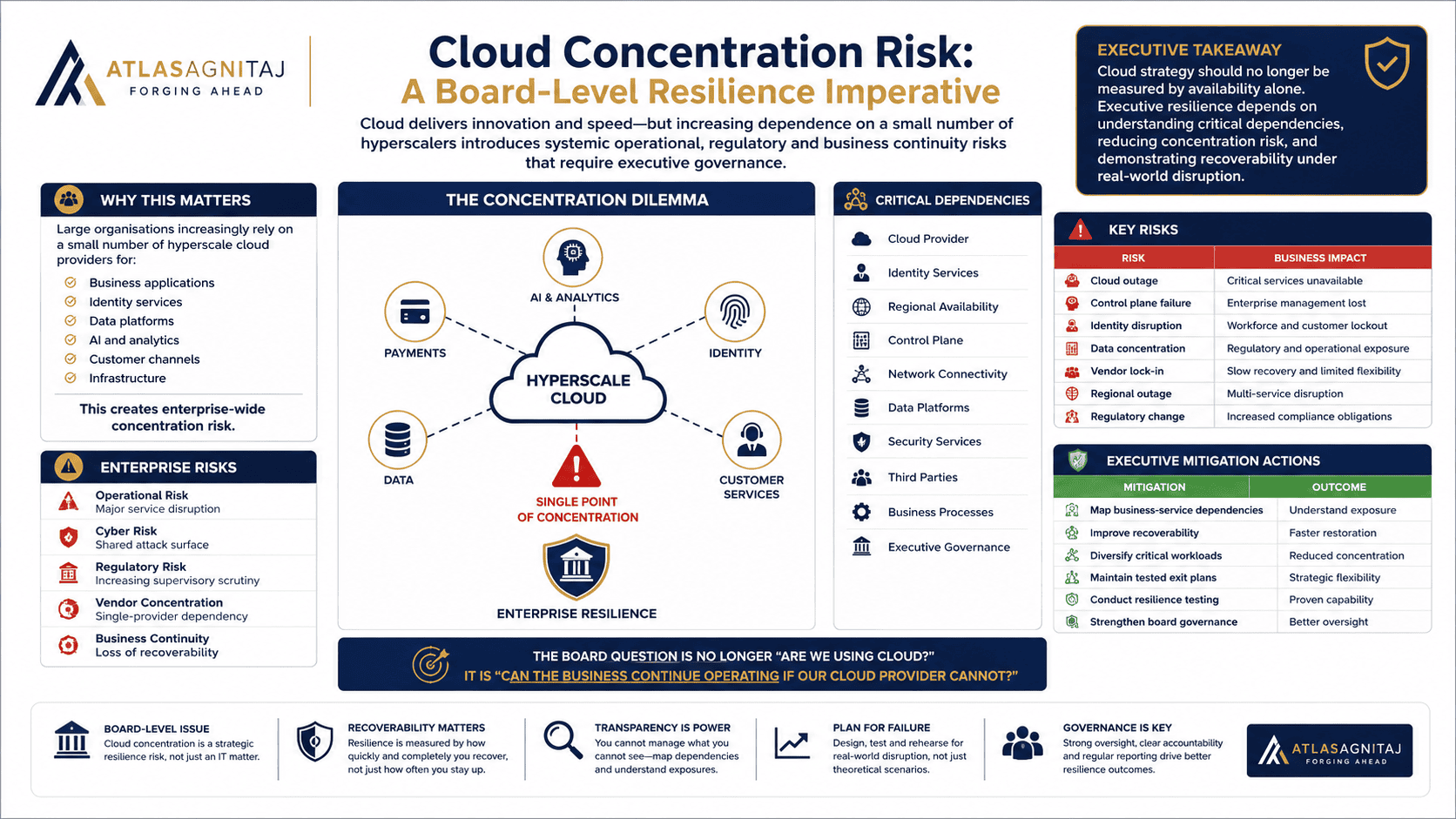
An executive perspective on AI literacy as the true precondition for enterprise transformation.
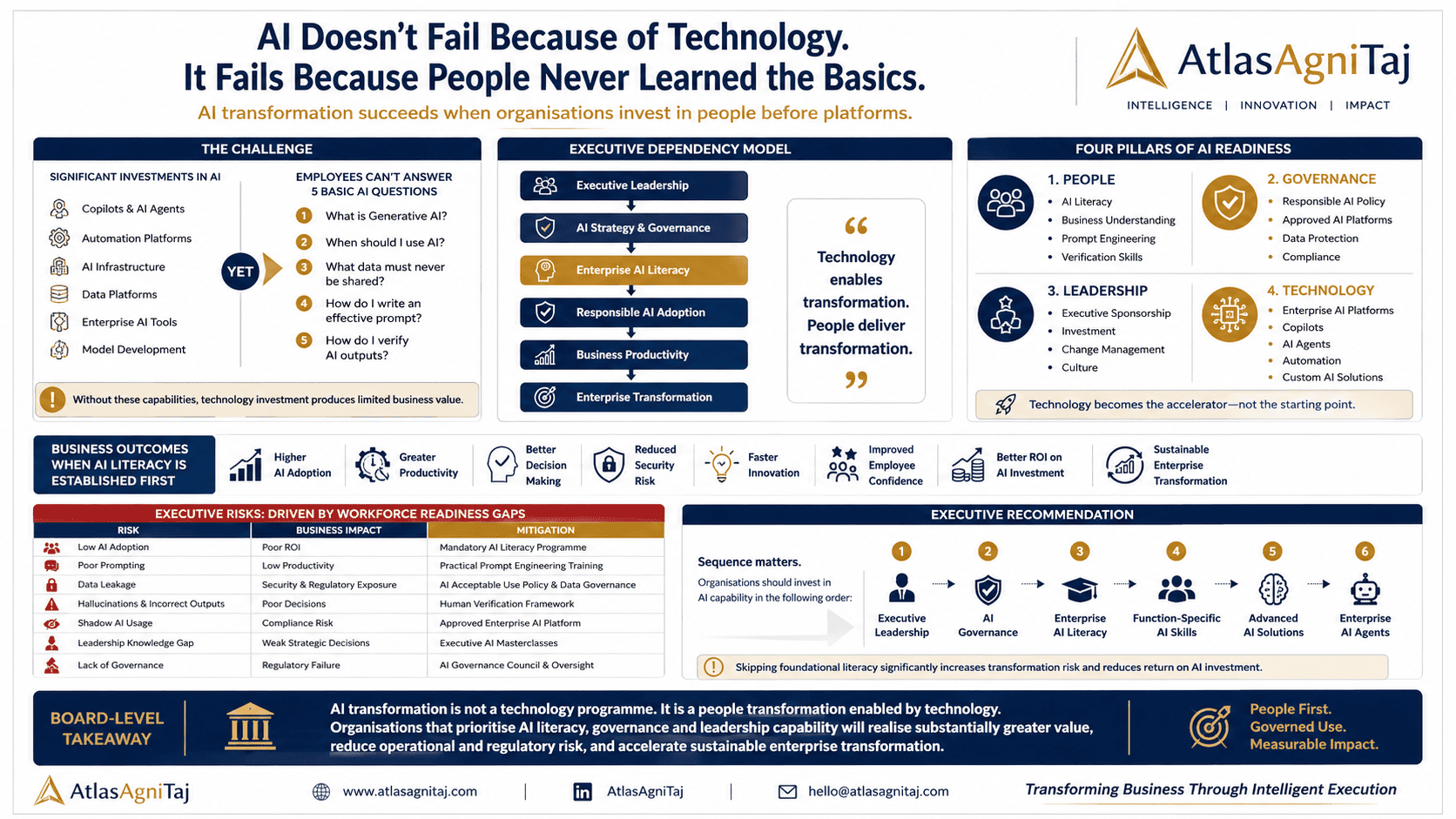
Over the past two years, boardrooms across every major industry have made artificial intelligence a defining strategic priority. Enterprise budgets have been redirected. Copilots, agents and automation platforms have been procured at pace. Data estates have been re-architected. And yet, when one sits with the employees who are supposed to derive value from these investments, a rather uncomfortable pattern emerges: many of them cannot answer the most basic questions about the technology now sitting on their desktops.
They struggle to articulate what generative AI actually is. They are uncertain when to use it and when not to. They do not know which categories of data they must never place into a public model. They have not been taught how to construct an effective prompt. And, perhaps most concerning of all, they have no reliable method for verifying whether the output they receive is trustworthy.
This is not a technology problem. This is a readiness problem. And unless it is addressed with the seriousness it deserves, the return on billions of pounds of AI investment will remain stubbornly disappointing.
The Paradox of the Well-Funded, Under-Adopted Programme
In my work with boards and executive committees across the GCC, the United Kingdom and Asia, I have observed a recurring pattern. The organisation announces an ambitious AI agenda. Vendors are engaged. Platforms are deployed. Executive dashboards begin tracking licences issued, models fine-tuned and use cases piloted. Twelve to eighteen months later, the sponsoring executive stands before the board and quietly reports that adoption is well below expectation, that measurable productivity gains are elusive, and that the compliance function has raised concerns about shadow usage.
At that point, the natural instinct is to interrogate the technology. Was the wrong platform chosen? Is the integration insufficient? Are the models the right size for the task? These are reasonable questions. But in nine cases out of ten, they are the wrong questions.
The technology, in most cases, is perfectly adequate. What has failed is the human system around it.
The Five Foundational Questions Every Employee Must Be Able to Answer
If an organisation wishes to derive genuine value from its AI investment, every employee — from the analyst to the executive — should be able to answer five foundational questions with confidence.
The first is deceptively simple: what is generative AI, and how is it different from the software I have used for the past twenty years? Employees who cannot answer this question tend to treat AI either as a magical oracle or as a slightly cleverer search engine. Neither mental model is correct, and both lead to poor outcomes.
The second is a question of judgement: when should I use it, and when should I not? Generative AI is superb at drafting, summarising, structuring, translating and exploring. It is markedly less reliable for tasks that require precise numerical calculation, verified sourcing, or definitive legal, medical or regulatory judgement. Employees who lack this discernment either under-use the technology or, more dangerously, over-trust it in situations where the cost of error is high.
The third concerns data stewardship: what information must never be shared with an external model? This is the question that keeps chief information security officers awake at night. Client-identifiable data, personal data protected under UAE, GCC or European regulation, commercially sensitive intellectual property, board papers, unpublished financial results, source code containing proprietary algorithms — none of these belong in a public generative model. And yet, without explicit guidance, employees frequently paste them in.
The fourth is a craft skill: how do I write an effective prompt? Prompting is not incantation. It is structured communication with a system that has no memory of your organisation, no understanding of your objectives and no visibility of your constraints unless you provide them. Employees who have not been taught to specify role, context, task, format and constraints will receive generic, mediocre output and conclude, incorrectly, that the technology is disappointing.
The fifth is the discipline of verification: how do I know whether the answer I have been given is correct? Generative models are, by design, plausibility engines. They produce language that reads convincingly, whether or not it is accurate. An employee who forwards an unverified AI-generated summary to a client, a regulator or a board member is exposing the organisation to reputational, commercial and legal risk.
Five questions. Every employee should be able to answer them. In most organisations, fewer than one in ten actually can.
The Cost of Poor AI Literacy
The consequences of neglecting AI literacy are not theoretical. They manifest in four measurable ways.
The first is low adoption. Licences are issued, dashboards report deployment, and yet actual usage is concentrated among a small enthusiast cohort while the majority of employees quietly revert to their previous tools. The business case is not realised. The board asks difficult questions. The programme is scaled back or quietly de-prioritised.
The second is poor productivity. Where the technology is used, it is often used badly. Employees produce weak prompts, receive mediocre outputs, spend more time correcting AI-generated work than they would have spent producing the work themselves, and conclude that the technology is not worth the effort. This is not a failure of the tool. It is a failure of training.
The third is data leakage. In the absence of clear guidance, employees paste sensitive information into public models with alarming regularity. This has already produced a well-documented series of incidents at global corporations. The reputational cost is significant. The regulatory cost, particularly under UAE Personal Data Protection Law, GDPR and forthcoming AI-specific regimes, will only grow.
The fourth is erosion of trust. When employees encounter poorly performing AI, when clients receive AI-generated content that is factually incorrect, when boards are presented with AI-derived analysis that turns out to be fabricated, the organisational appetite for further AI investment declines. The very transformation the organisation was pursuing becomes politically untenable.
Each of these outcomes is preventable. None requires a change in technology. All require a change in people.
Successful AI Transformation Begins With People, Not Platforms
There is a temptation, particularly in technology-led organisations, to treat AI transformation as a procurement exercise. Choose the platform, negotiate the licences, deploy the integrations, and value will follow. This is a misreading of the discipline.
Digital transformation over the past two decades has taught the profession a clear lesson: technology is the enabler, but people are the multiplier. The organisations that extracted genuine value from cloud migration, from enterprise resource planning, from customer relationship management, were not those that bought the best software. They were those that invested most seriously in adoption, capability and change management.
AI is no different, except that the stakes and the speed of change are markedly higher. The technology is advancing more quickly than any previous enterprise category. The regulatory environment is tightening. The competitive gap between AI-fluent and AI-illiterate organisations is widening every quarter. And the workforce, unlike in previous transformations, has extraordinarily uneven starting points — from senior partners who have never opened a chat interface to graduate hires who use these tools instinctively.
Against this backdrop, the sequencing of investment matters enormously. Before an organisation commits significant capital to advanced AI solutions — agentic architectures, custom-trained models, sovereign platforms — it must first ensure that every employee shares a common understanding of what AI is, how it should be used responsibly, how it is governed, and how it applies to their specific business context.
Without this foundation, advanced solutions land on unprepared ground and yield disappointing returns.
A Practical Framework for Enterprise AI Literacy
In advising clients on AI literacy programmes, I recommend a four-tier framework that mirrors the maturity progression seen in successful digital literacy initiatives.
The first tier is universal foundation. Every employee, without exception, should complete a short, well-designed programme covering what generative AI is, how it works at a conceptual level, when it is appropriate to use, what data must never be shared, how to write effective prompts, and how to verify outputs. This is the baseline of AI citizenship inside the organisation. It should be mandatory, refreshed annually, and treated with the same seriousness as information security or anti-bribery training.
The second tier is functional application. Employees in each function — finance, legal, human resources, marketing, operations, engineering — should receive training tailored to the specific use cases, risks and opportunities of their discipline. A financial analyst has different needs from a marketing executive. A procurement manager faces different risks from a software engineer. Generic training does not create genuine capability; contextual training does.
The third tier is leadership fluency. Executives and senior managers need a deeper understanding of the strategic, ethical and governance dimensions of AI. They must be able to interrogate vendor claims, evaluate use cases against risk appetite, engage credibly with regulators, and set the cultural tone for responsible use. This is not a matter of learning to prompt more effectively; it is a matter of learning to lead in a domain where the ground is shifting rapidly beneath one’s feet.
The fourth tier is specialist depth. A smaller cohort — data scientists, machine learning engineers, AI product managers, model risk officers — requires genuine technical depth. This is the layer that builds and governs the organisation’s AI capability, and it must be resourced, developed and retained accordingly.
An organisation that invests in all four tiers, in the correct sequence, will realise dramatically more value from its AI investment than one that skips directly to tier four while neglecting tier one.
Governance and Responsible Use
AI literacy cannot be separated from governance. An employee who does not understand the rules cannot follow them, and rules that are not understood are rules that will be broken.
Every organisation embarking on serious AI adoption should establish, publish and train employees on a clear acceptable-use policy. This document should specify which tools are approved, which data categories are permitted in which tools, which use cases require human review, which decisions must not be delegated to AI, and how incidents are to be reported. It should be short enough to be read, plain enough to be understood, and specific enough to be actionable.
Alongside the policy, organisations should establish a lightweight but visible governance forum — typically a cross-functional AI council chaired by an executive with genuine authority — that reviews new use cases, adjudicates edge cases, and evolves the framework as the technology and the regulatory landscape change. This is not a bureaucratic overlay; it is the mechanism by which the organisation demonstrates, to its board, its regulators and its clients, that it is deploying AI responsibly.
Literacy, policy and governance are three legs of the same stool. Remove any one, and the structure fails.
It is also worth noting that the regulatory environment is not standing still. The European Union’s AI Act is now in force, the UAE has published national AI guidance that continues to evolve, and financial and healthcare regulators across the GCC are actively developing sector-specific expectations. Organisations that treat AI literacy and governance as an internal cultural exercise will find, sooner than they anticipate, that these matters have become supervisory ones. Preparing the workforce now is a form of regulatory insurance as much as it is a productivity investment.
AI Literacy Is the New Digital Literacy
Twenty years ago, the ability to use email, a spreadsheet and a browser competently was a differentiator. Today it is a baseline. No organisation would hire a professional who could not perform these functions, and no organisation invests significantly in teaching them because they are assumed.
AI literacy is on precisely the same trajectory, but compressed into a far shorter timeframe. Within three to five years, the ability to work fluently and responsibly with generative AI will be an assumed capability, not a differentiator. The professionals and the organisations that acquire this fluency now will command a substantial advantage. Those that delay will find themselves not merely behind, but structurally disadvantaged.
This is not a marginal shift. It is a generational one. And it will not be won by procurement.
The Leadership Imperative
The responsibility for AI literacy sits with leadership. It cannot be delegated to the training function alone, nor to the IT department, nor to a well-intentioned committee. It requires visible executive sponsorship, sustained investment, and a willingness to hold the organisation to a standard.
Chief executives should ask three questions of their teams. First, can every employee in this organisation answer the five foundational questions? Second, do we have a documented, communicated and enforced policy on responsible AI use? Third, are we investing at least as much in people and governance as we are in platforms and licences? If the honest answer to any of these is no, the transformation is at risk regardless of how impressive the technology stack appears.
Boards, for their part, should be asking their executive teams to report on AI literacy and governance with the same regularity and rigour as they report on cyber resilience. The parallels are exact: both are asymmetric risks, both depend on human behaviour as much as on technology, and both reward organisations that treat them as strategic rather than operational concerns.
How Atlas Agni Taj Can Help
At Atlas Agni Taj, we work with boards, executive committees and transformation leaders across the UAE, the wider GCC and international markets to design and deliver AI transformation programmes that begin, correctly, with people. Our practice combines four decades of enterprise transformation experience with deep, current expertise in generative and agentic AI, sovereign infrastructure and regulated environments.
We help organisations design AI literacy programmes tailored to their sector, their workforce and their regulatory context. We author and operationalise responsible-use policies. We establish and chair AI governance councils. We deliver executive masterclasses that give senior leaders the fluency they require to lead credibly in this domain. And we do all of this with a bias for practical outcomes rather than theoretical frameworks.
We do this because we believe, on the basis of considerable evidence, that the organisations which invest in their people today will realise disproportionate value from AI tomorrow. And we believe that the organisations which do not will discover, uncomfortably and expensively, that no platform, however advanced, can compensate for a workforce that has not been prepared.
A Question for Reflection
I would leave the reader with a single question, and I would invite genuine reflection rather than a reflexive answer.
In your own organisation, what do you believe is the greater barrier to AI adoption today: the technology itself, or the readiness of the people who are meant to use it?
The answer, I suspect, will be more revealing than most executives expect. In many cases it will point not to a shortcoming in the tools that have been procured, but to a gap in the foundational preparation of the people who are expected to use them. That gap is entirely closeable, provided leadership treats it as the strategic priority it demonstrably is.
#ArtificialIntelligence #AILiteracy #DigitalTransformation #Leadership #Innovation #FutureOfWork #BusinessTransformation #GenerativeAI #AtlasAgniTaj