NOT JUST AI AMBITION
AI-Native Government Needs Programme Discipline, Not Just AI Ambition
The Gulf is entering a new phase of public-sector transformation. Abu Dhabi’s Government Digital Strategy 2025–2027 sets out an ambition that would have seemed extraordinary only a few years ago: full process digitisation across government entities, one hundred per cent sovereign cloud adoption, more than two hundred artificial intelligence solutions deployed at scale, and a unified enterprise resource planning platform spanning multiple government departments. This is not a research agenda or a set of pilot projects confined to innovation labs. It is a live delivery, governance and operating-model challenge, unfolding in real time, with real budgets, real citizens and real consequences for failure.
For technology and transformation leaders across the UAE and the wider Gulf Cooperation Council, this shift from digital government to AI-native government is the defining executive challenge of the decade. Yet in my experience advising and delivering large-scale transformation programmes across the region, the conversation in most boardrooms remains fixated on ambition — on the number of AI use cases announced, the scale of investment committed, and the speed with which new capabilities can be unveiled. Far less attention is given to the harder, less glamorous question that ultimately determines success or failure: can the organisation actually deliver this safely, reliably and at scale?
This article sets out why AI-native government will be won or lost not on the strength of AI ambition, but on the strength of programme discipline — and what that discipline must look like in practice.
From Digital Government to AI-Native Government
The maturity journey that Gulf governments are now navigating can be understood as a five-stage progression. The first stage, digital services, is largely complete across the UAE: citizens and businesses can transact with government online, forms have been digitised, and channels have been consolidated. The second stage, integrated data, is where many entities currently sit — building the data platforms, master data structures and interoperability layers that allow information to move across departmental boundaries rather than remaining trapped in siloed systems. The third stage, sovereign cloud, is advancing rapidly, driven by national policy commitments to host critical government workloads within sovereign infrastructure for reasons of security, resilience and data residency. The fourth stage, AI-enabled operations, sees artificial intelligence embedded into live operational processes — case management, service triage, fraud detection, resource allocation and citizen engagement. The fifth and final stage, AI-native government, is one in which artificial intelligence is not a bolt-on capability but a structural feature of how government operates: decision support, service delivery and policy formulation are all shaped by continuously learning systems operating on trusted, governed data.
The distance between stage four and stage five is where most transformation programmes falter. It is one matter to deploy an AI solution within a controlled pilot. It is an entirely different matter to operate two hundred such solutions simultaneously, across multiple departments, with the reliability, auditability and safety that citizens and regulators rightly expect of government services. That distance is not closed by better algorithms. It is closed by disciplined programme management.
The Real Challenge Is Not Choosing the Right AI Tools
Every transformation leader I speak with in the region is, understandably, focused on selecting the right AI platforms, the right large language models, and the right vendors. These are important decisions. But they are not the decisions that determine whether AI-native government succeeds. The real challenge sits one level below the technology choice, in questions that are far less visible from the boardroom but far more consequential in practice:
- Can the organisation redesign its processes before automating them, rather than automating dysfunction and simply making it faster?
- Can data be trusted, reconciled and governed consistently across departments that have historically operated with their own definitions, systems and standards?
- Do cloud, cybersecurity, ERP and integration platforms possess the capacity, resilience and interoperability to support AI at the scale being promised?
- Can governance structures keep pace with the speed at which AI capability is being introduced, without becoming either a bottleneck or an afterthought?
- Can the workforce adopt new ways of working — new roles, new accountabilities, new human-machine collaboration models — without creating operational risk or eroding public trust?
None of these questions can be answered by procurement alone. They require the discipline of programme management: clear ownership, sequenced delivery, risk management, benefits tracking and rigorous change control. This is the uncomfortable truth that ambition-led transformation narratives tend to avoid — the hardest part of AI-native government is not intelligence. It is operational readiness.
Why Ambition Without Discipline Fails
Across more than three decades leading enterprise technology and transformation programmes — spanning aviation, banking, healthcare, financial services and, more recently, sovereign infrastructure and government-adjacent programmes in the UAE — I have observed a consistent pattern. Transformation initiatives succeed or fail based on one factor above all others: whether leadership treats the initiative as a programme of business change, or merely as an IT installation.
When AI is treated as an IT installation, the organisation focuses on system deployment, technical integration and go-live dates. Governance is retrofitted after the fact. Business process owners are consulted late, if at all. Change management is reduced to a training session delivered in the final weeks before launch. The result is a technically functioning system that the organisation does not trust, does not fully understand, and often works around rather than through.
When AI is treated as a programme of business change, the sequence is reversed. Process redesign precedes automation. Data governance is established before data is put to work. Cybersecurity and resilience requirements are embedded into architecture from the outset, not layered on afterwards. Change adoption is planned as a multi-month workstream with its own budget, milestones and accountable owner, running in parallel with technical delivery rather than following it. Governance is designed to move at the speed of delivery, with clear escalation paths and decision rights, rather than acting as a compliance checkpoint that slows everything down.
The difference between these two approaches is not subtle. It is the difference between an AI pilot that never scales and an AI-native operating model that genuinely transforms public service delivery.
The Six Pillars of Programme Discipline
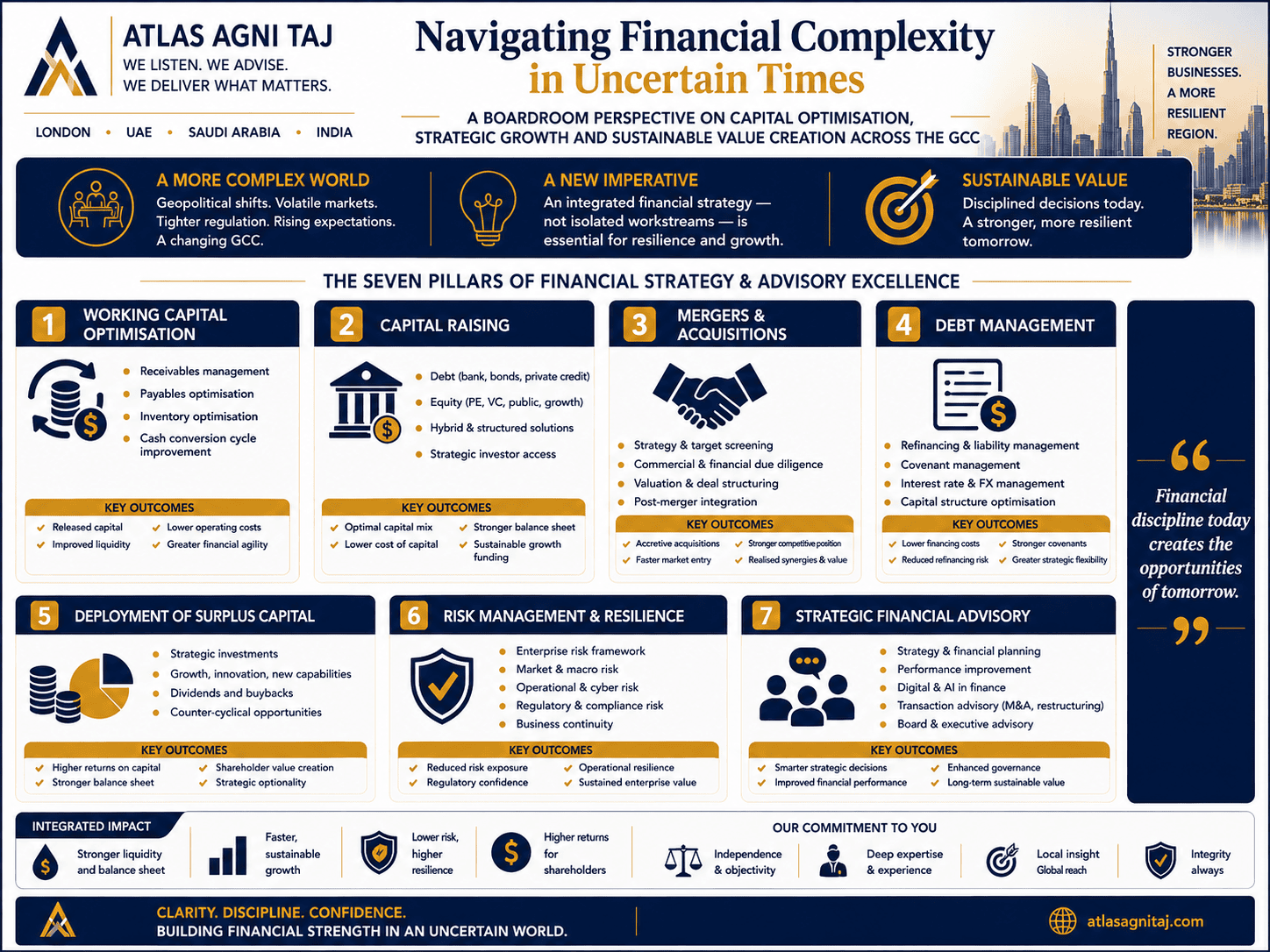
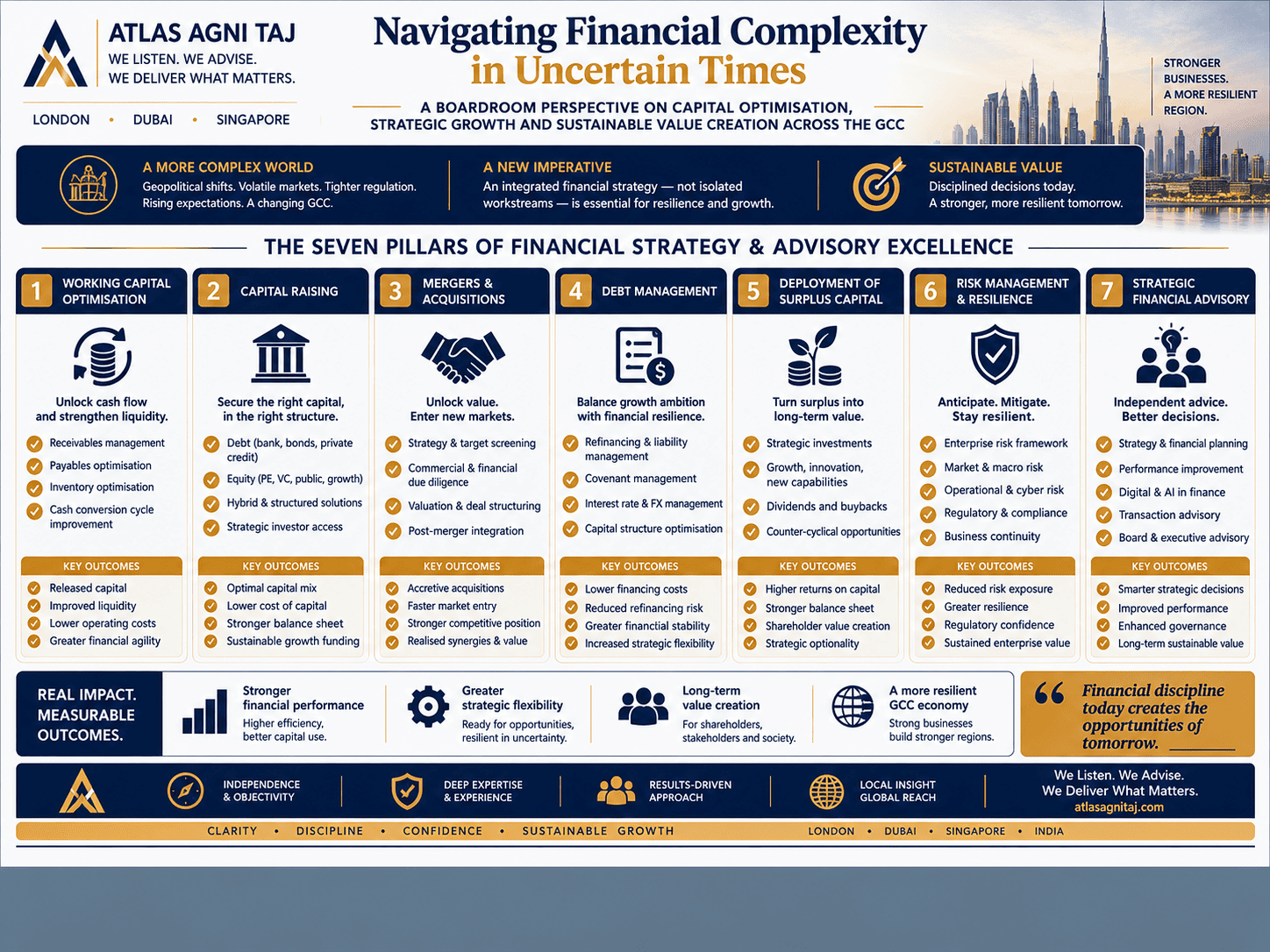
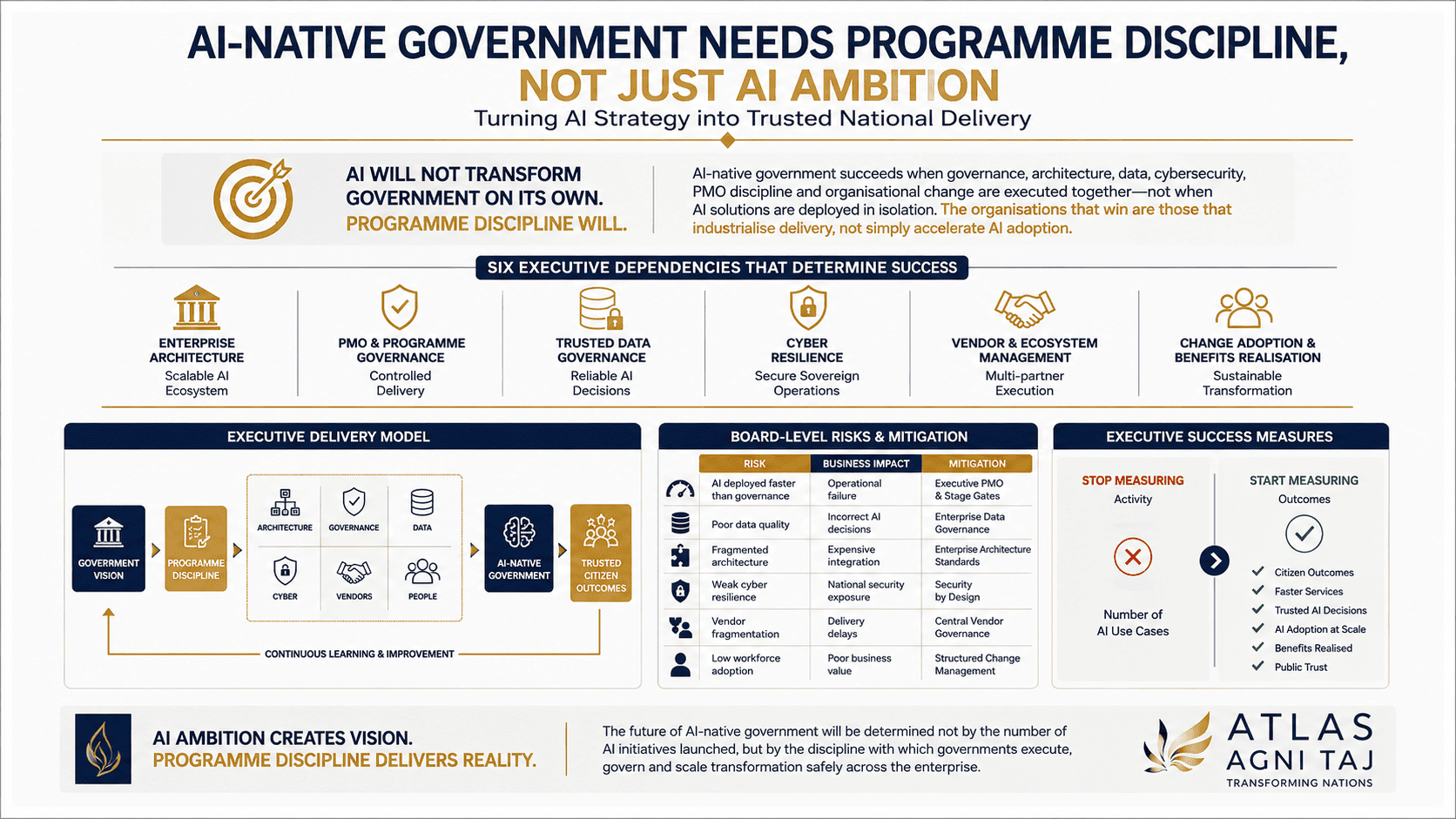
Having led and advised on large-scale transformation across both private and public sector contexts, I would suggest that AI-native government rests on six pillars of disciplined delivery. Each is necessary; none alone is sufficient.
First, architecture. AI-native operations require an enterprise architecture that has been deliberately designed to support scale — common data models, published APIs, clear system-of-record definitions, and integration standards that prevent the proliferation of point-to-point connections. Architecture decisions made in year one determine whether an organisation can support twenty AI solutions or two hundred.
Second, a disciplined Project Management Office. A capable PMO does far more than track Gantt charts. It provides the single source of truth for programme status, manages interdependencies across dozens of parallel workstreams, enforces stage-gate discipline before capabilities move from pilot to production, and gives senior sponsors an honest, early warning of risk rather than a reassuring status update that later proves to have been optimistic.
Third, data governance. Artificial intelligence is only as trustworthy as the data that feeds it. Establishing clear data ownership, quality standards, lineage and stewardship across departmental boundaries is unglamorous work, but it is the precondition for every AI use case that follows. Organisations that skip this step inevitably discover it later, at far greater cost, when an AI system produces an output that cannot be explained or defended.
Fourth, cyber resilience. As AI becomes embedded in operational decision-making, the attack surface and the consequence of failure both increase materially. Cyber resilience for AI-native government cannot be a parallel workstream owned by a separate security function; it must be designed into the architecture, the data platforms and the operational model from the outset.
Fifth, vendor and ecosystem management. Delivering AI-native government at the scale envisaged by current national strategies necessarily involves multiple vendors, system integrators, cloud providers and specialist AI firms. Coordinating this ecosystem — avoiding duplication, managing contractual accountability, and ensuring interoperability between vendor solutions — is itself a significant programme management discipline, and one that is frequently underestimated.
Sixth, change adoption and benefits realisation. Ultimately, AI-native government is judged not by the sophistication of the technology deployed, but by measurable improvement in service delivery, citizen experience and operational efficiency. This requires a disciplined benefits realisation framework established at the outset of the programme, not retrofitted as a reporting exercise once the technology has gone live, together with sustained investment in workforce adoption and capability building.
These six pillars — architecture, PMO discipline, data governance, cyber resilience, vendor management and change adoption — do not compete with AI ambition. They are what makes AI ambition achievable.
The Governance Layer Beneath the Maturity Curve
It is worth being explicit that the five-stage maturity journey from digital services to AI-native government does not progress on its own momentum. Beneath every stage sits a governance layer that must be continuously reinforced: PMO discipline, cyber resilience, data governance, change adoption, vendor control and benefits realisation. Organisations that under-invest in this governance layer may still progress through the early stages of the maturity curve, often reaching integrated data and even sovereign cloud adoption, because these stages are primarily technical in nature. It is at the transition into AI-enabled operations, and particularly into AI-native government, that the absence of governance discipline becomes acute — because these later stages depend on trust, and trust cannot be manufactured retrospectively.
This is why the most successful transformation leaders I have worked alongside treat governance not as a constraint on ambition, but as the enabling infrastructure that allows ambition to be realised safely and at pace.
The Opportunity for the Region
None of this discussion is intended to temper enthusiasm for what the UAE and the wider Gulf are attempting. The opportunity is genuinely significant, and in global terms, unusually favourable. Few regions combine the sovereign investment capacity, the political will, the relatively compact government structures and the appetite for bold technology adoption that the UAE currently possesses. The ambition set out in strategies such as Abu Dhabi’s Government Digital Strategy 2025–2027 is not misplaced; if anything, it reflects a level of national seriousness about AI-native transformation that many larger economies would struggle to match.
But ambition must be matched, stage for stage, by execution discipline. The next generation of digital transformation across the region will not be judged by how many AI use cases are announced at conferences or featured in strategy documents. It will be judged by how safely, reliably and effectively those use cases improve services, reduce friction for citizens and businesses, and create measurable public value over a sustained period. That is a considerably higher bar than the one currently being used to measure progress in much of the public discourse around AI transformation.
What This Means for CIOs, CTOs and Transformation Leaders
For technology executives across government entities, government-adjacent organisations and the system integrators and consultancies that support them, this is the moment to connect strategy with delivery. Artificial intelligence transformation is not, fundamentally, about intelligence — in the sense of algorithmic sophistication or model capability. Those matters are increasingly commoditised and improving rapidly through the market regardless of what any single organisation does. What is not commoditised, and what continues to differentiate successful transformation from stalled transformation, is operational readiness: the architecture, the governance, the data foundations, the cyber resilience, the vendor discipline and the workforce adoption that together determine whether ambition becomes reality.
The leaders who will be most valued in this environment are not necessarily those with the deepest technical knowledge of artificial intelligence models, though that knowledge is valuable. They are the leaders who understand how to sequence a transformation programme correctly — who know when to redesign a process before automating it, when to pause a rollout because data quality has not yet reached the required standard, when to escalate a vendor risk before it becomes a delivery crisis, and when to slow down technically in order to bring the organisation with them. This is programme leadership in the fullest sense: the ability to hold technical delivery, governance and human change together as a single, coherent effort.
This raises an important question for every transformation leader currently operating in the region: what is the single biggest execution risk in your organisation’s journey from digital services to AI-native operations? Is it data trust across departments? Is it the pace of governance relative to the pace of deployment? Is it vendor coordination across an increasingly complex ecosystem? Or is it the workforce’s capacity to adopt new ways of working at the speed the strategy demands? Naming that risk honestly, and resourcing it accordingly, is the first and most important act of programme discipline.
How Atlas Agni Taj Can Help
Atlas Agni Taj is a boutique transformation advisory firm, with a presence across London, Dubai and Singapore, built specifically to bridge the gap between AI ambition and delivery discipline that this article has described. We work with government entities, regulated enterprises and private-sector organisations across the UAE and GCC to bring the programme rigour that AI-native transformation demands, without losing the pace and ambition that sponsors rightly expect.
Our support typically spans several areas that mirror the six pillars set out above:
- Programme and PMO design — establishing or strengthening the governance architecture, stage-gate controls and reporting discipline needed to manage complex, multi-workstream AI and digital transformation portfolios.
- Operating model and process redesign — ensuring processes are re-engineered before automation is applied, so that AI accelerates good practice rather than entrenching existing inefficiency.
- Data governance and readiness assessment — evaluating data quality, ownership and lineage across departmental boundaries, and building the governance frameworks required to make AI outputs trustworthy and defensible.
- Cyber resilience and risk integration — embedding security and resilience requirements into architecture and delivery plans from inception, rather than as a late-stage compliance exercise.
- Vendor and ecosystem management — bringing structure and accountability to multi-vendor AI and cloud delivery environments, including system integrator oversight and contractual governance.
- Change adoption and benefits realisation — designing the workforce adoption, capability-building and benefits tracking frameworks that determine whether transformation investment translates into measurable public and business value.
Whether the requirement is an independent programme health check, interim leadership of a critical transformation workstream, or end-to-end design of an AI-native operating model, Atlas Agni Taj brings senior, hands-on transformation leadership — grounded in decades of enterprise, ERP, cloud and sovereign infrastructure delivery — to help organisations across the region convert AI ambition into disciplined, trusted execution.
Measuring Success Beyond the Use-Case Count
One further discipline deserves particular attention from senior sponsors: how success itself is measured. It is tempting, and politically convenient, to report progress in terms of the number of AI use cases deployed, the number of processes digitised, or the volume of data migrated to sovereign cloud. These are useful operational indicators, but they are not, on their own, measures of transformation success. A government entity could deploy two hundred AI solutions and still fail its citizens if those solutions are unreliable, poorly integrated, or if the underlying processes they automate were never properly redesigned in the first place.
A more mature measurement framework looks instead at outcome-level indicators: reduction in end-to-end service times as experienced by citizens and businesses; consistency and accuracy of AI-supported decisions, including the rate at which such decisions require human override or generate complaints; the proportion of AI solutions that have moved successfully from pilot to sustained production use, as distinct from those that stall after an initial launch; and the extent to which frontline staff report genuine confidence in the systems they are now working alongside, rather than merely tolerating them. Establishing this measurement discipline early, and reporting it consistently to senior sponsors and oversight bodies, is itself a hallmark of programme maturity. It shifts the executive conversation away from announcements and towards accountability, which is precisely where it needs to sit if AI-native government is to earn and retain public trust.
This measurement discipline also serves a second, quieter purpose. It gives transformation leaders an early warning system. A programme that is tracking use-case counts alone will not notice a decline in citizen trust, an increase in override rates, or a slowdown in the pilot-to-production conversion rate until it becomes a visible political problem. A programme that tracks outcome-level indicators from the outset will see these signals months earlier, while there is still time to intervene through governance, retraining or process correction rather than through crisis management.
Conclusion
The UAE and the GCC are moving decisively from digital government to AI-native government. This is a profound shift, and one that carries substantial promise for citizens, businesses and the standing of the region as a global centre of technological leadership. But the organisations that succeed in this transition will not be those with the boldest AI announcements. They will be those with the discipline to build the architecture, the governance, the data foundations and the workforce capability that allow ambition to be delivered safely, reliably and at scale. Strategy sets the destination. Programme discipline is what gets government there.
#AINativeGovernment #DigitalTransformation #CIOLeadership #UAE #GCC #AIGovernance #PMO #TechnologyLeadership
© Atlas Agni Taj — Proprietary